Cold chain capacity, shipment-level visibility, accountability, and scalability were recurring themes in conversations with pharmaceutical manufacturers.
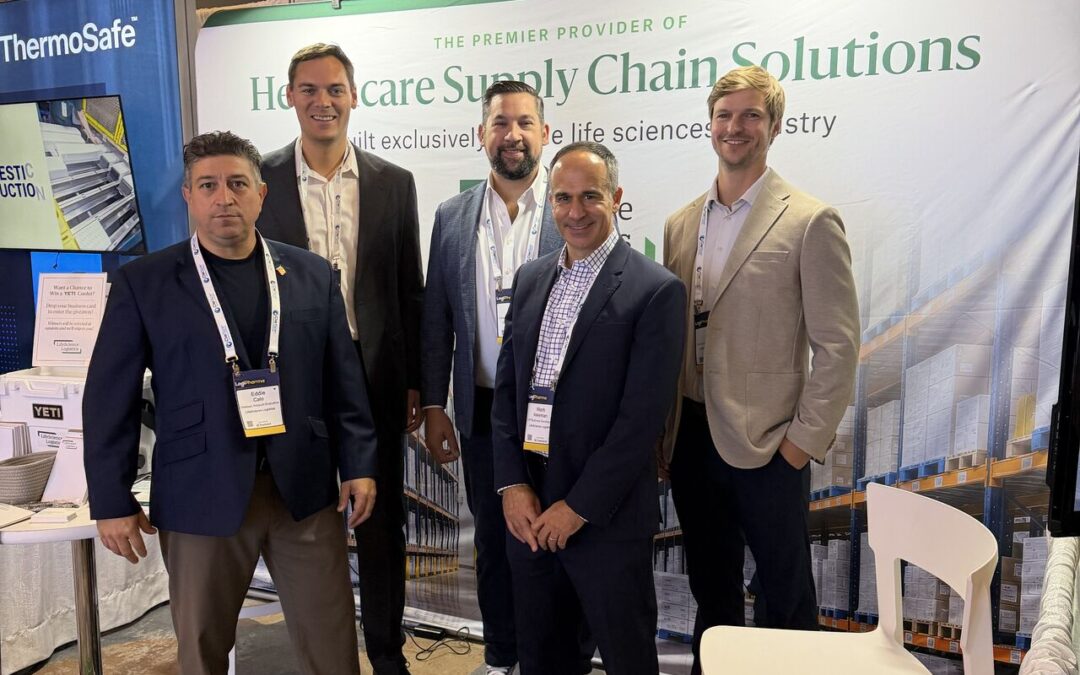
At LogiPharma 2026 in Boston, the LifeScience Logistics (LSL) team connected with pharmaceutical manufacturers, supply chain leaders and industry partners to discuss the challenges influencing their distribution strategies.
We asked our team onsite (Edward (Eddie) Calo, Kyle W. Kingma, Ryan Oppel, Mark Newman, and Will Coen) to share the themes they heard repeatedly while there.
Four topics surfaced:
- growing demand for cold chain warehousing
- interest in advanced parcel-level sensor technology
- questions about how liability should be shared with logistics providers
- And the need for scalable distribution operations
Here’s a deeper look at what our team heard and what these conversations mean for pharmaceutical supply chain management:
1. Demand for Cold Chain Warehousing Is Growing
Cold chain capacity was a frequent topic at LogiPharma, with manufacturers looking for storage solutions to accommodate temperature-sensitive products and anticipated growth.
Finding available refrigerated or frozen space is one challenge. Finding a facility with the infrastructure and quality systems to properly manage pharmaceutical inventory is another.
Temperature-controlled operations require qualified equipment, continuous monitoring, documented handling procedures, and contingency plans for equipment failures or other disruptions. Requirements also vary by product, from controlled room temperature pharmaceuticals to refrigerated biologics and ultra-low-temperature therapies.
Manufacturers considering new cold chain partners should examine how those facilities operate, particularly how temperature excursions are detected, documented, and managed.
Cold chain capacity planning is equally important. Expanding a temperature-controlled operation can involve equipment procurement, qualification, systems configuration and personnel training. These requirements can make it difficult to accommodate substantial volume increases without advance preparation.
LifeScience Logistics supports pharmaceutical manufacturers with controlled room temperature (20–25°C), refrigerated (2–8°C), frozen (–15°C to –25°C) and ultra-low-temperature (–60°C to –80°C) storage capabilities.
For manufacturers anticipating growth, evaluating cold chain capacity early can help avoid operational constraints when additional inventory is ready for distribution.
2. Manufacturers Want Better Visibility into Individual Shipments
Another recurring conversation centered on integrating advanced sensors and software into individual parcels.
Manufacturers expressed interest in capturing information about events that traditional shipment tracking systems may not document, particularly during transportation and handoffs between providers.
One example was light exposure monitoring. Sensors capable of detecting light events may help identify when packaging has been opened or exposed during transit, providing additional information for quality investigations.
Other technologies can document temperature fluctuations, shock, tilt and handling conditions.
For manufacturers of sensitive pharmaceuticals, this information could help fill gaps between warehouse monitoring and proof of delivery.
More Data Requires Better Processes
The usefulness of sensor technology depends on what happens after an event is recorded.
A light event, for example, does not automatically mean a product has been compromised. The significance depends on the product, its packaging, and the circumstances involved.
Manufacturers need processes for reviewing sensor data, determining whether an investigation is necessary, and documenting subsequent decisions.
They also need to consider how monitoring information will move between manufacturers, transportation providers, and 3PLs.
As these technologies become more widely adopted, integrating shipment data into existing quality and logistics workflows will be an important part of realizing their value.
3. Liability Is Becoming a Larger Part of the 3PL Conversation
Several conversations at LogiPharma involved manufacturers seeking to shift more liability for logistics-related risks to their 3PL partners.
This raises questions about how responsibilities are defined and what happens when a shipment is damaged, mishandled, or exposed to unacceptable conditions.
While outsourcing logistics does not eliminate a manufacturer’s regulatory obligations, contracts can establish how specific operational and financial risks are allocated between parties.
Manufacturers evaluating these arrangements should also consider the processes a 3PL uses to prevent, document and investigate problems.
For example, when a temperature excursion occurs, the manufacturer needs access to reliable records showing when the event was detected, how the product was handled, and what actions were taken.
Established procedures for inventory control, product segregation, deviations and corrective actions all contribute to a provider’s ability to manage these situations.
The interest in more sophisticated shipment monitoring is relevant here, too. Better documentation of handling events may help manufacturers and their partners understand where an issue occurred and support subsequent investigations.
Ultimately, the terms of a logistics agreement should be supported by operational capabilities and clearly defined responsibilities.
4. Manufacturers Need 3PL Partners That Can Support Growth
Growth and expansion were also prominent topics among the manufacturers our team met at LogiPharma.
Some organizations are preparing for commercialization, while others anticipate higher distribution volumes, additional products or expansion into new markets.
These changes can place substantial demands on existing logistics operations.
A fulfillment process that works for a limited number of orders may not perform as reliably when volume increases significantly. More transactions require greater coordination across inventory management, picking and packing, quality oversight, staffing, and transportation.
Scalability Starts with Operational Planning
Available warehouse space is important, but capacity alone does not determine whether a 3PL can support expansion.
Manufacturers should evaluate how a provider’s systems and workflows accommodate additional volume and complexity.
LSL’s commercialization and application engineering experts have emphasized the importance of understanding a manufacturer’s projected operating requirements before implementing a distribution program.
Order profiles, product characteristics, inventory levels, and customer requirements all influence how an operation should be designed.
For manufacturers moving toward commercialization, early planning can help avoid process changes and operational disruptions as distribution activity increases.
The same applies to established manufacturers adding products or entering new markets. A logistics provider should be able to explain how it will accommodate those changes while maintaining appropriate quality controls and fulfillment accuracy.
What These Conversations Mean for Pharmaceutical Logistics
The discussions at LogiPharma reinforced several considerations for manufacturers evaluating their distribution strategies.
Cold chain requirements are influencing facility and capacity decisions. Advanced monitoring technologies are creating opportunities to document shipment conditions in greater detail. Liability discussions are placing more attention on operational responsibilities, while growth plans are making scalability an increasingly important factor in 3PL selection.
Each of these priorities requires manufacturers to look closely at the capabilities and processes behind a logistics provider’s services.
At LifeScience Logistics, our FDA-registered facilities, cGMP-aligned operations, specialized temperature-controlled infrastructure and experience supporting pharmaceutical commercialization and distribution help manufacturers manage these requirements.
We appreciated the opportunity to connect with industry colleagues at LogiPharma 2026 and hear firsthand about the challenges influencing their supply chain decisions.
Planning for Growth or Evaluating Your Current 3PL?
Whether you’re preparing for commercialization, expanding your distribution network or seeking additional cold chain capacity, LifeScience Logistics can help you assess your requirements and plan your next steps.
Connect with the LifeScience Logistics team to discuss your pharmaceutical warehousing and distribution needs.
