Reducing Temperature Excursions in Pharma Supply Chain
In 2026, cold chain integrity is no longer just about maintaining temperature ranges during transit.
As biologics, personalized medicine, and ultra-cold therapies reshape healthcare logistics, every handoff, delay, and environmental exposure creates operational and regulatory risk.
Temperature excursions remain one of the most expensive and persistent threats in pharmaceutical supply chains. Part of the reason this challenge is pervasive is because it is misunderstood. But according to LifeScience Logistics leaders Ryan Oppel and Jeff Gainer, many organizations are still focused on the wrong failure points.
In this article, LSL breaks down:
- where temperature excursions actually begin
- how leading organizations quantify cold chain risk
- why Time Out of Range (TOR) has become a critical operational metric
- what “full chain integrity” now requires in the era of cell and gene therapy
Where Most Temperature Excursions Actually Start
When cold chain failures occur, shipping is often blamed first. However, excursions happen across nearly every handoff point in the supply chain, and many of the biggest risks are operational, not transportation related.
Ryan Oppel, Chief Commercial Officer at LSL, identifies several common contributors:
- Delayed product put-away
Product delivered to a facility but not immediately moved into temperature-controlled storage begins accumulating exposure time immediately. - Packaging not validated for full transit duration
Packaging that performs well for short routes may fail during extended transit windows or unexpected delays. - Inconsistent parcel carrier handling
Courier variation remains a major risk factor for parcel-level cold chain shipments. - Tarmac exposure and solar radiation
Airport tarmac delays during summer months or in warm-weather hubs can rapidly compromise temperature integrity. - Reefer unplug windows during sea freight transfers
The period between container unplug and temperature-controlled induction remains one of the most vulnerable points in international cold chain logistics.
“LSL has clear procedures upon receipt of product for immediate put away into its proper temperature requirements,” Ryan explains, “and in some cases through induction of our cold dock in order to further mitigate temperature excursion potential and to not eat into the excursion allowance of the medication.”
Understanding TOR: Time Out of Range
One of the most important (yet most misunderstood) concepts in cold chain management is Time Out of Range (TOR). Jeff Gainer, Director of Business Enablement at LifeScience Logistics, defines TOR: the documented period a product spends outside its validated temperature range.
While some organizations use the phrase “time out of refrigeration,” TOR is more accurate because it applies across all validated temperature environments, including controlled room temperature (CRT) products.
Every pharmaceutical product has a finite excursion allowance: a cumulative limit for how long it can remain outside its required temperature conditions before product integrity may be compromised.
That distinction matters operationally.
Every unnecessary minute outside a validated environment reduces the available excursion allowance for that product. Cold docks, immediate put-away protocols, validated packaging, and real-time monitoring all exist to preserve that margin.
The Cold Chain Risks Healthcare Supply Chain Leaders Still Underestimate
According to both Ryan and Jeff, the greatest cold chain failures rarely come from a single catastrophic event.
Instead, they stem from gradual erosion of operational discipline.
Organizations often loosen process rigor when disruptions become infrequent, creating exposure over time.
Ryan points to insufficient investigation into transportation delays as one of the most overlooked risks in healthcare logistics.
If teams do not thoroughly analyze why delays occurred, the same failures repeat, often at significantly greater operational and financial cost.
Jeff highlights another common gap: inadequate contingency planning for weather events and regional disruptions.
Despite increasing frequency of hurricanes, wildfires, and winter storms, many organizations still fail to build resilient continuity plans into their supply chains.
The leaders agreed on the most underestimated risk of all: process execution.
“One of the things that 99% of organizations underestimate is the exceptional process rigor that you need to execute cold chain consistently and successfully.”
– Jeff Gainer, Director of Business Enablement, LifeScience Logistics
This becomes especially critical in personalized medicine and cell and gene therapy.
“I can’t just dispatch another batch of medication,” Ryan explains. “It’s a one-to-one shipment. Accuracy of address information, digital data transmission, and visibility all the way through confirmed delivery becomes critical.”
How Leading 3PLs Quantify Cold Chain Risk
Effective cold chain risk management starts with lane mapping.
Lane mapping documents every handoff, transit mode, facility, climate exposure, and transfer point across a shipment route. Once mapped, organizations can identify where excursion risk is highest and proactively design mitigation strategies.
“The goal is to be proactive.,” Ryan explains, “Use digital visibility and data to intercept potential issues before they become product losses.”
Network design also plays a major role in risk reduction.
LSL maintains multiple facilities near major shipping ports with replicated capabilities to support business continuity and operational redundancy. This strategy enables rapid product transfers and continuity planning across the supply chain network.
Vendor partnerships are equally as important.
Jeff emphasizes the importance of working with logistics and packaging partners who understand product viability windows and validated transit tolerances, particularly during delays or failed deliveries.
How “Full Chain Integrity” Has Changed
Five years ago, cold chain integrity primarily meant maintaining temperature from point A to point B.
That definition has expanded significantly.
Today’s healthcare supply chains require:
- real-time shipment visibility
- documented chain of custody
- chain of identity tracking
- validated environmental controls
- rapid exception response
- security and compliance monitoring across every handoff
Growing regulatory expectations around traceability and security, including DSCSA compliance and TAPA-aligned practices, continue raising the bar.
This evolution is most visible in cell and gene therapy logistics.
“In some cases, we’re transporting medication valued at more than $3 million per dose. We have to know exactly where that product is and how it is stored at every stage of the manufacturing and distribution process.”
-Ryan Oppel, Chief Commercial Officer, LifeScience Logistics
Some therapies involve patient-derived tissue requiring ultra-cold storage, strict chain-of-identity controls, and delivery windows where failed shipments may not be replaceable.
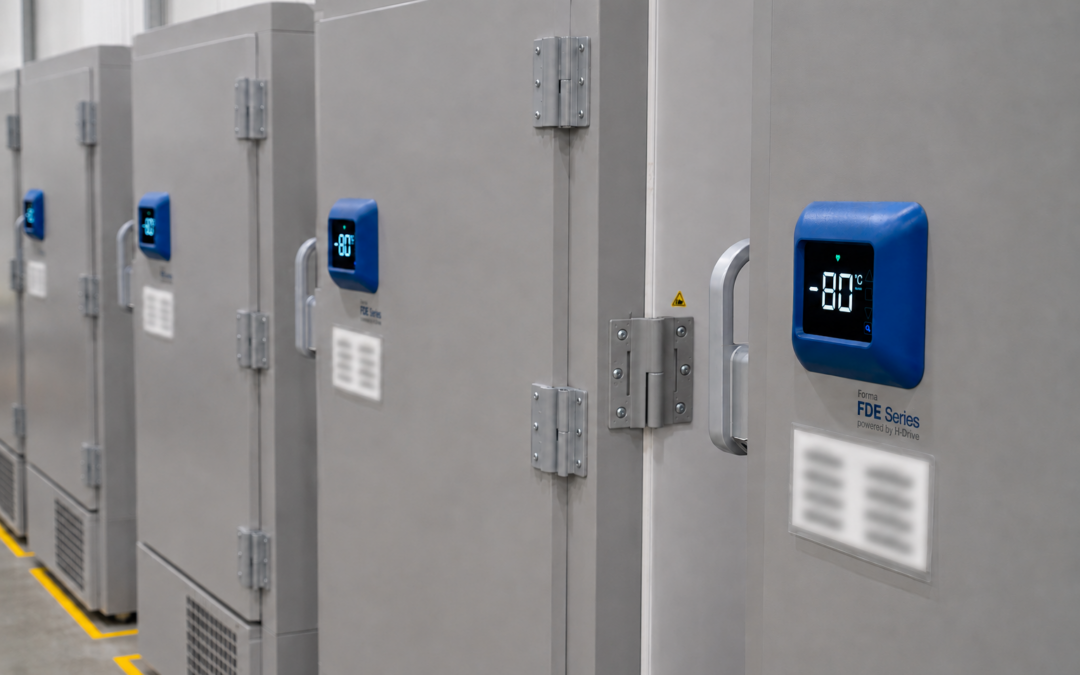
The Engineering Challenge of Ultra-Cold Storage
Emerging therapies increasingly require storage environments below standard frozen conditions, creating major infrastructure and engineering challenges.
“When you go below −20°C and you’re talking about pallet-level storage, there’s a tremendous engineering undertaking that needs to be considered,” Ryan explains. “You can’t just put a freezer into a building and assume it’s qualified.”
Ultra-cold storage environments require:
- specialized structural integration
- redundant refrigeration systems
- backup power architecture
- precise environmental controls
- validated monitoring infrastructure
Jeff notes that ultra-cold storage costs can reach 5x that of standard refrigerated environments due to the complexity of maintaining compliant conditions at scale.
This level of infrastructure separates healthcare-specialized 3PLs from general warehousing operators.
What Healthcare Organizations Should Expect from a Modern Cold Chain 3PL
As therapies become more sensitive, valuable, and patient-specific, healthcare organizations need logistics partners capable of supporting far more than basic storage and transportation.
Modern cold chain 3PL capabilities should include:
- validated temperature-controlled infrastructure
- real-time shipment visibility
- documented SOPs and excursion response protocols
- business continuity planning
- redundant systems and network flexibility
- chain of custody and chain of identity controls
- ultra-cold storage expertise
- regulatory and compliance support
Cold chain integrity is no longer a standalone logistics function. It is now directly tied to product viability, regulatory compliance, operational continuity, and patient outcomes.
Raising the Bar on Cold Chain Integrity
Temperature excursions are not inevitable.
They are the result of gaps in process, infrastructure, visibility, and operational execution.
Closing those gaps requires more than written procedures. It requires engineered infrastructure, validated workflows, experienced personnel, and disciplined execution across every stage of the supply chain.
At LifeScience Logistics, cold chain integrity is foundational to how we operate. From cold dock induction protocols to ultra-cold storage infrastructure and multi-site network redundancy, our systems are designed around the reality that many healthcare products leave no margin for error.
Learn more about how LSL supports pharmaceutical, biotech, and medical device organizations with healthcare-focused cold chain logistics and 3PL services.
